

What is Joint Care and why is it important?
Many young people receive their cancer treatment at UCLH but do not live close to the hospital. A joint care arrangement between the Principal Treatment Centre (PTC) and local services ensures that, when they return home, they can still access essential elements of their care without the cost, time, and disruption of travelling long distances. This is especially important given the financial pressures of cancer treatment on families and the aim for young people to continue education wherever possible. Joint care also means local teams are aware of the young person and can respond appropriately if an emergency arises while they are at home.
For children (usually under 16 or 18, depending on Trust policy), this model already exists through Paediatric Oncology Shared Care Units (POSCUs), which provide coordinated access to treatment, bypass to A&E, elective reviews, SACT, transfusions, and broader supportive care.
However, for young people above POSCU age, access to local support is inconsistent. Some receive little or no care near home, meaning they must travel to UCLH for every intervention, including routine blood tests and central line care.
According to national service specifications, joint care should provide:
Supportive care services, including:
- Management of febrile neutropenia
- Symptom control (e.g., nausea, vomiting, pain)
- Central venous access management
- Blood product support
Minimum services local TYA Designated Hospitals must offer:
- Outpatient supportive care and follow-up (e.g., blood tests, transfusions)
- Emergency care and inpatient symptom management
- Signposting to local support services
To ensure safe, coordinated care, joint care pathways must be formally agreed between UCLH and local services, enabling good communication and clarity about roles and responsibilities.
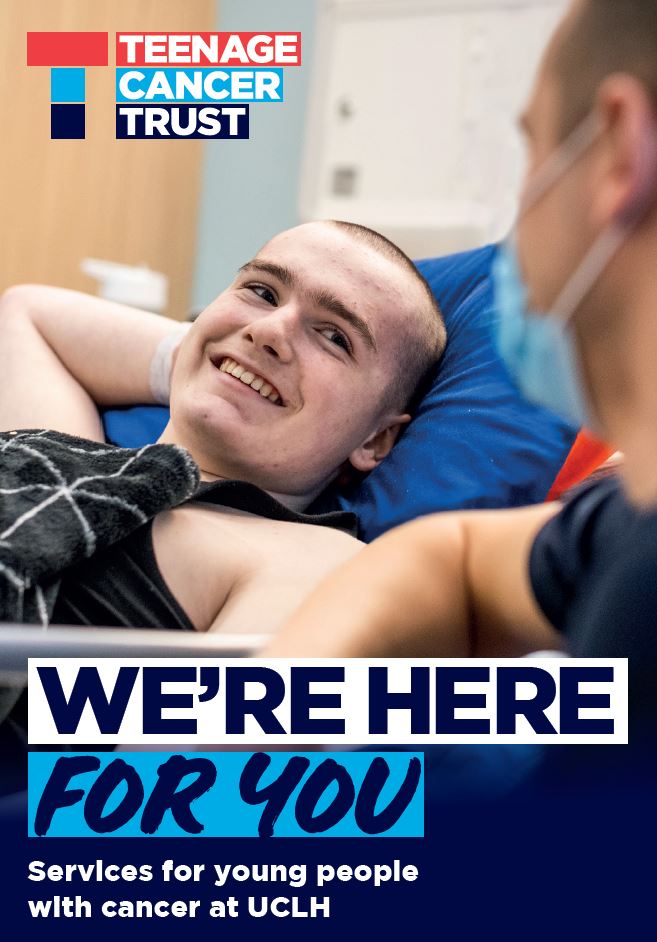
Services for young people with cancer at UCLH
Click on the image to download the brochure